
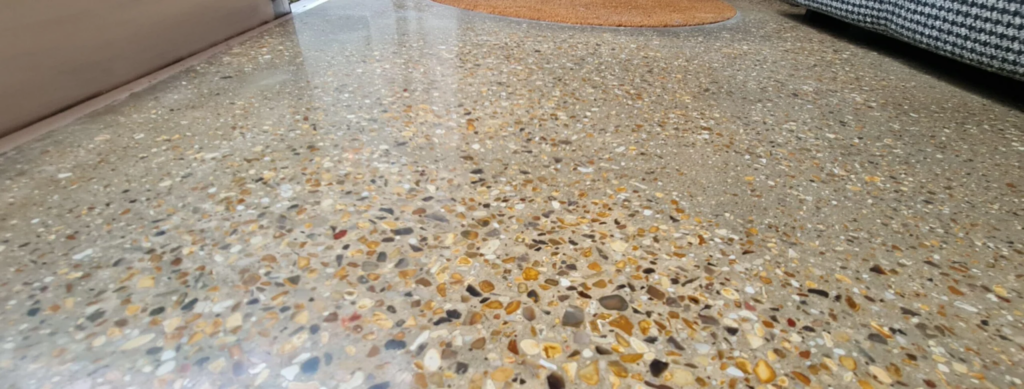
Residential polished concrete floors offer a modern appearance and a practical surface for many areas of the home. They can suit living rooms, kitchens, hallways, dining areas, and open-plan spaces. Their smooth finish and natural variations give each floor its own character, making them a popular option for homeowners who want a simple and contemporary interior.
One of the main attractions of concrete flooring is its clean design. A neutral grey surface can complement white walls, wooden furniture, modern cabinets, and natural materials. Depending on the concrete and polishing method, homeowners can choose different levels of shine and aggregate exposure to create a finish that matches their style.
Polished concrete can also be useful in homes where several rooms connect. Using the same flooring across an open-plan area creates a consistent appearance and may help the space feel more spacious. It can work in both new properties and some existing homes, provided the concrete slab is suitable for polishing.
However, the final result depends on the condition of the concrete, the preparation required, and the selected treatment. Before choosing this type of flooring, it is worth learning about its benefits, limitations, installation process, and maintenance needs. This information will help you decide whether it suits your home and everyday lifestyle.
What Are the Main Benefits of Concrete Flooring at Home?
Concrete flooring offers several benefits for homeowners who want a durable and attractive surface. When properly prepared and maintained, polished concrete can handle regular household foot traffic and provide a long-lasting finish. It is especially useful in areas where people frequently walk between rooms.
Cleaning is another advantage. Dust, crumbs, and everyday dirt can usually be removed by sweeping or vacuuming. A damp mop and a suitable cleaning product can help keep the surface looking fresh. Unlike carpet, polished concrete does not have fibres that collect dust and small particles, although regular cleaning is still necessary.
Design flexibility is also important. Concrete can have a subtle sheen or a more reflective finish, depending on the polishing process. The amount of visible stone within the surface may vary, creating a simple or more decorative appearance. This allows homeowners to choose a finish that works with different interior designs.
Concrete can also work with underfloor heating when the floor construction and heating system are designed correctly. The material can store and release heat, but overall comfort and efficiency depend on insulation, the heating system, and the building itself.
There are some limitations to consider. Concrete is hard underfoot, and dropped plates or glasses may break more easily. The surface can also feel cold without heating or suitable insulation. Understanding these points before installation helps you make a balanced decision.
Which Rooms Are Suitable for Polished Concrete?
Polished concrete can be used in several parts of a home, but the best application depends on the property and the condition of the existing floor.
Living rooms are a common choice because concrete creates a clean background for furniture and decorative features. A neutral finish can work with sofas, rugs, timber furniture, and large windows. In open-plan homes, it can connect the living room with the kitchen and dining area without a change in flooring material.
Kitchens can also benefit from polished concrete because the surface is generally straightforward to clean when properly treated. Food and drink spills should still be wiped up quickly, and the correct protective treatment can help reduce staining. Rugs or suitable mats may improve comfort in areas where people stand for long periods.
Hallways and entrance areas experience frequent foot traffic, so a properly finished concrete floor may be a practical option. However, grit and dirt should be removed regularly to reduce surface wear. Using entrance mats can help limit the amount of debris brought into the house.
Dining areas can benefit from the continuous appearance of concrete flooring. Chairs should have suitable protective pads to help reduce scratches when they are moved. Bedrooms are another possible application, although some people prefer a softer surface underfoot. Area rugs can provide warmth and comfort without covering the entire floor.
Bathrooms and other wet areas need additional care. Suitability depends on the floor system, sealing, surface texture, drainage, and slip resistance. A polished surface can become slippery when wet, so the finish should be selected with safety in mind.
Choosing the Right Colour and Surface Finish
The appearance of a polished concrete floor depends on several choices, including colour, aggregate exposure, and sheen. These details can affect how the flooring looks in natural and artificial light.
Grey is a popular option because it works with many colour schemes. Light grey may help a room feel bright and understated, while darker shades can create a bold contrast with pale furniture and walls. Some concrete surfaces contain natural variations in colour and texture, adding visual interest without requiring a decorative pattern.
Aggregate exposure refers to how much of the small stones within the concrete becomes visible during grinding. A finish with limited exposure may look relatively uniform, while greater exposure can create a more decorative, stone-like appearance. The result depends on the slab’s composition and how deeply it is ground.
The level of shine also matters. A lower-sheen finish can create a subtle modern look, while a more reflective surface may help distribute light around a room. Ask the installer to explain which finishes are achievable with your concrete rather than assuming every design is possible.
Before choosing a final appearance, consider your furniture, lighting, wall colours, and room size. Samples or photographs of similar completed projects can help you understand the options, although the natural variation of concrete means the result may not be identical.
How the Installation Process Works
A successful flooring project starts with an inspection of the existing concrete. The installer checks the slab for cracks, uneven sections, old coatings, moisture concerns, and other conditions that could affect the final result.
The next step is surface preparation. Depending on the condition of the slab, this may involve cleaning, removing coatings, repairing cracks, or correcting selected imperfections. The amount of preparation required can influence the project cost and completion time.
Grinding equipment is then used to refine the surface. Several stages may be needed to achieve the desired smoothness and aggregate exposure. A densifier may be applied to help harden the concrete, followed by additional polishing stages. A suitable protective treatment may also be used, depending on the flooring system.
The installation process can create dust and noise, so homeowners should discuss access and room preparation with the contractor. Furniture may need to be removed, and nearby rooms may require protection. If you are renovating the whole house, coordinate the flooring work with other trades to reduce delays and protect the finished surface.
Before work begins, ask for a written explanation of the stages involved, the expected schedule, and the finish included in the quote.
Maintenance Tips for a Long-Lasting Floor
Polished concrete does not require complicated daily care, but regular maintenance helps preserve its appearance. Sweep or vacuum the floor to remove dust, sand, and grit. These small particles can gradually affect the finish if they remain on the surface and are repeatedly walked over.
For general cleaning, use a damp mop and a cleaning product suitable for polished concrete. Avoid harsh chemicals unless the flooring specialist confirms they are safe for the protective treatment. Using too much water is usually unnecessary, so follow the product guidance for the installed system.
Wipe up spills promptly, especially acidic liquids, cooking oils, and coloured drinks. A suitable sealer can help reduce staining, but it does not make every concrete floor completely stain-proof.
Furniture protection is another useful step. Place suitable pads under chair and table legs to reduce the chance of scratching. When moving heavy furniture, lift it where possible rather than dragging it across the floor.
Over time, some floors may need professional maintenance or a renewed protective treatment. The timing depends on household traffic, the finish, and the products used during installation. Follow the maintenance advice supplied by your installer for the best results.
What Should You Consider Before Choosing Concrete Floors?
Before committing to polished concrete, consider how you use your home. Families with children or pets may appreciate the easy cleaning, but the hard surface may not be ideal for every room. Rugs can add comfort, while furniture pads can help protect the floor.
The condition of your existing concrete is equally important. Some slabs are suitable for polishing with limited preparation, while others need repairs or may not produce the finish you want. An inspection can help identify these issues before you commit to a budget.
You should also compare quotes carefully. Check whether the price includes surface preparation, repairs, grinding, polishing, and protective treatments. Ask about additional costs if unexpected issues are found during the work.
Finally, think about the overall design. Polished concrete can look excellent in a contemporary home, but it should suit your furniture, lighting, heating arrangements, and personal preferences. Comparing finishes and understanding the practical requirements will help you make a confident choice.
Conclusion
Polished concrete can provide a clean, modern look and a durable surface for many areas of the home. The best results come from choosing a suitable slab, planning the finish carefully, and using a qualified installer who explains the preparation and maintenance requirements. Consider comfort, slip resistance, cleaning, and the condition of the concrete before making a decision. For homeowners exploring professional concrete flooring options, Delta Profloor is one company to consider when researching a suitable finish for their property.
Frequently Asked Questions
1. Are polished concrete floors suitable for family homes?
Yes, they can be suitable for many family homes because they are durable and generally easy to clean. Their hardness and surface texture should be considered when choosing the right rooms and finish.
2. Can existing concrete floors be polished?
Some existing concrete slabs can be polished, but the condition of the surface determines what is possible. A specialist should inspect cracks, coatings, moisture, and uneven areas before recommending a method.
3. Do polished concrete floors need regular sealing?
The maintenance requirements depend on the polishing system and protective treatment. Ask your installer whether a sealer is included and how the surface should be maintained.
4. Are polished concrete floors cold in winter?
Concrete can feel cold, particularly in rooms without suitable heating or insulation. Underfloor heating may be an option when the floor construction and heating system are designed to work together.
5. Are polished concrete floors expensive to maintain?
Routine maintenance can be straightforward and may only require regular sweeping and damp mopping. Costs over time depend on the finish, household use, and whether professional maintenance is needed.