
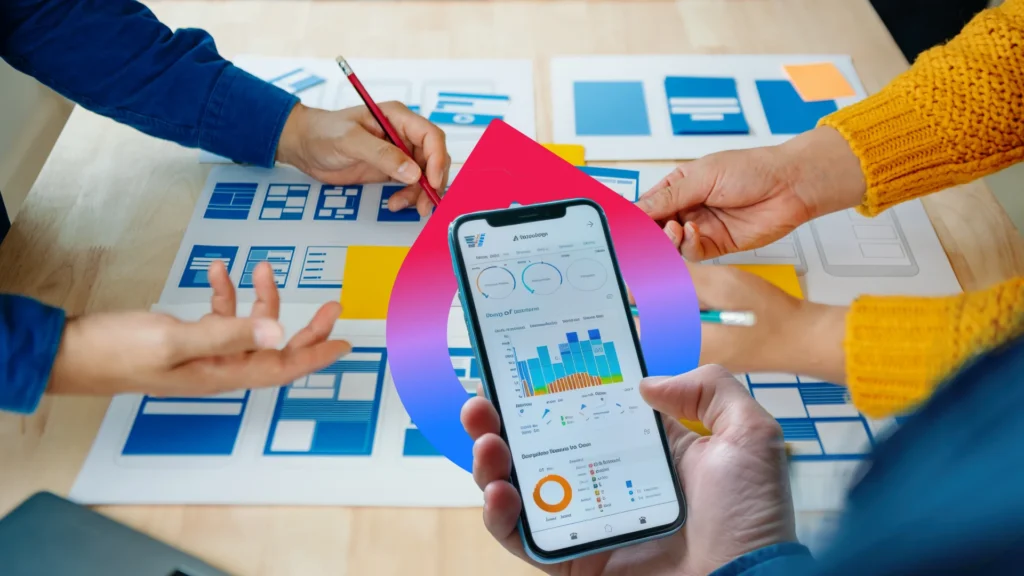
Mobile app development in Riyadh is changing the way businesses interact with customers, deliver services, and build long-term digital relationships. Instead of relying only on websites, physical locations, phone calls, or traditional customer service channels, businesses can use mobile applications to create direct and convenient experiences for their audiences.
For customers, a well-designed mobile app can make everyday activities easier. They can order products, book appointments, make payments, track deliveries, communicate with businesses, access personalized offers, and manage their accounts from a single device.
For businesses, the opportunity goes beyond convenience. Mobile applications can provide valuable customer insights, automate repetitive processes, improve communication, increase retention, and create additional revenue channels.
However, simply having an app does not guarantee better customer experiences. The application must be fast, easy to navigate, secure, localized, and designed around the actual needs of its users. Businesses also need to understand how customers behave before, during, and after each interaction.
This is particularly important in mobile app development in riyadh, where businesses across retail, food, healthcare, real estate, education, logistics, finance, and other industries are increasingly adopting digital solutions.
So, how exactly is mobile app development changing customer experiences in Riyadh, and what should businesses consider when creating their own applications?
What Is Changing About Customer Expectations in Riyadh?
Customers increasingly expect businesses to provide convenient digital experiences.
People are accustomed to completing tasks quickly from their smartphones. They may want to compare products, place an order, schedule an appointment, make a payment, or receive an update without having to visit a physical location or wait for assistance.
This changes the expectations businesses need to meet.
A customer may judge a company not only by its products or services but also by how easy it is to interact with the business digitally.
A slow checkout process, confusing navigation, poor support, or difficult registration can create frustration even when the underlying product is good.
Mobile applications give businesses an opportunity to remove many of these obstacles by placing important services directly in the customer’s hands.
Why Are Mobile Apps Becoming Important for Customer Experience?
A mobile application can provide a more direct relationship between a business and its customers.
Unlike a traditional website that users may visit occasionally, an installed application can remain available on a customer’s device and provide access to services whenever needed.
Businesses can create experiences around specific customer journeys.
For example, a restaurant application might allow users to:
- Browse menus
- Customize orders
- Save favorite meals
- Make payments
- Track deliveries
- Receive order updates
- Earn loyalty rewards
A healthcare application could provide appointment booking, reminders, communication, and access to relevant information.
An eCommerce application might offer product discovery, personalized recommendations, order tracking, and promotional notifications.
The value comes from reducing friction throughout the customer’s journey.
How Can Apps Make Customer Journeys Simpler?
One of the biggest advantages of mobile applications is their ability to bring multiple actions into one digital environment.
Consider a customer who wants to book a service.
Without an app, they may need to search for a website, find a phone number, call the business, wait for confirmation, and possibly contact the company again to change the appointment.
An application can reduce this journey to a few taps.
The customer can select a service, choose an available time, confirm the booking, make a payment if necessary, and receive an automatic reminder.
This does not just save time for the customer. It can also reduce manual work for the business.
The same principle applies to ordering, delivery, reservations, subscriptions, customer support, and many other services.
How Does Personalization Improve Mobile Experiences?
Customers increasingly expect digital services to understand their preferences.
Mobile applications can support personalization by using information such as previous purchases, browsing activity, saved preferences, location, and engagement patterns.
For example, an eCommerce application could highlight products related to a customer’s previous purchases.
A food application could display favorite restaurants or frequently ordered meals.
A fitness application could recommend content based on previous activity.
Personalization should be used carefully. Businesses need to provide value rather than overwhelming users with irrelevant recommendations or notifications.
When implemented properly, personalization can make the application feel more useful and reduce the effort customers need to find what they want.
Why Does Localization Matter for Riyadh Users?
Localization is an important part of creating a strong mobile experience for customers in Riyadh.
For many applications, supporting both Arabic and English can make the product more accessible to a broader audience.
However, localization involves more than translating text.
The application should properly support Arabic layouts, right-to-left navigation, localized content, suitable terminology, and culturally appropriate user experiences.
Businesses should also consider local payment preferences, customer expectations, business practices, and relevant regulations.
A localized application can feel significantly more natural than a product that was simply translated from another market.
How Can Arabic and English Support Be Designed Properly?
A bilingual application should be planned from the beginning.
If Arabic support is added after the interface has already been designed around English, developers may need to make substantial changes to layouts, navigation, buttons, forms, and other components.
Arabic text can have different lengths and requires right-to-left presentation.
Therefore, UI/UX designers should account for both languages during the initial design process.
Users should also be able to switch languages easily without losing important information or disrupting their current activity.
A consistent bilingual experience can help businesses serve different customer groups without creating two completely separate products.
How Do Mobile Apps Improve Customer Communication?
Communication is another area where applications can create a stronger relationship between businesses and customers.
Push notifications can be used to provide timely information such as:
- Order confirmations
- Delivery updates
- Appointment reminders
- Payment notifications
- Subscription information
- Special offers
- Account alerts
- Important service announcements
The key is relevance.
Too many notifications can cause users to disable them or uninstall the application.
Businesses should therefore create notification strategies based on customer needs and preferences rather than sending messages simply because the technology allows it.
Can Mobile Apps Improve Customer Support?
Mobile applications can also make customer support more accessible.
Businesses can provide features such as:
- In-app messaging
- Help centers
- Frequently asked questions
- Chatbots
- Support tickets
- Order-specific assistance
- Contact forms
- Call-back requests
For example, a customer waiting for a delivery may be able to contact support directly from the order screen instead of searching for a phone number.
Contextual support can make problem resolution faster because the business already has information about the customer’s account or transaction.
This can improve the overall experience while reducing unnecessary communication between customers and support teams.
How Do Mobile Apps Build Customer Loyalty?
Customer loyalty is often influenced by convenience, consistency, personalization, and perceived value.
A mobile application can bring these elements together.
Businesses can create loyalty programs where customers receive points for purchases, unlock rewards, access special offers, or receive personalized benefits.
For example, a restaurant might reward frequent customers with discounts or free items.
A retailer could offer app-exclusive promotions.
A service provider could create membership benefits that encourage customers to return.
The application becomes more than a transaction tool. It becomes an ongoing channel for maintaining the customer relationship.
How Can Apps Create New Revenue Opportunities?
Mobile applications can also support new business models.
Depending on the industry, businesses can use apps for:
- Direct product sales
- Subscriptions
- Premium services
- In-app purchases
- Booking fees
- Membership programs
- Marketplace commissions
- Advertising
- Digital products
For example, an educational business could offer premium courses through its application.
A fitness company could introduce subscription-based workout programs.
A retailer could create an app-based loyalty program that encourages repeat purchases.
The revenue model should be aligned with the business rather than added simply because competitors use it.
Which Riyadh Industries Can Benefit Most?
Mobile app development in Riyadh can support customer experiences across a wide range of industries.
Retail and eCommerce
Retail businesses can use applications to provide product catalogs, personalized recommendations, digital payments, order tracking, loyalty programs, and customer support.
The application can also connect online shopping with physical stores.
Restaurants and Food Businesses
Food businesses can provide digital menus, ordering, delivery tracking, reservations, loyalty programs, and personalized promotions.
Customers can complete much of the ordering process without calling the restaurant.
Healthcare
Healthcare applications can make it easier for patients to book appointments, receive reminders, communicate with providers, and access relevant information.
The exact functionality depends on the healthcare service and applicable requirements.
Real Estate
Real estate applications can simplify property discovery by providing listings, images, search filters, location information, inquiries, and communication tools.
Customers can explore properties without relying entirely on traditional office visits.
Education
Educational businesses and institutions can use applications to provide lessons, assessments, communication, schedules, notifications, and learning materials.
A well-designed application can make learning resources accessible beyond traditional classrooms.
Logistics
Logistics companies can provide customers with shipment tracking, delivery updates, location information, and communication tools.
Businesses can also use mobile applications internally for drivers and operational teams.
Financial Services
Financial applications can provide convenient access to accounts, payments, transactions, financial information, and customer support.
Because financial data is highly sensitive, security and compliance need to be treated as fundamental parts of the product.
What Features Create Better Customer Experiences?
The right features depend on the business model, but several capabilities can have a major impact on usability.
Simple Registration
Customers should not be forced through unnecessarily complicated registration processes.
Where appropriate, businesses can provide streamlined onboarding and authentication options.
Fast Search
For applications containing large amounts of content, products, properties, or services, effective search can save users significant time.
Filters and categories can make discovery even easier.
Digital Payments
A smooth payment experience can reduce friction at the point where customers are most likely to abandon a transaction.
Order and Service Tracking
Customers often want visibility after completing an action.
Tracking can provide reassurance and reduce the need to contact customer support.
Push Notifications
Relevant notifications can keep customers informed about important changes and actions.
Customer Profiles
Profiles can allow customers to manage addresses, preferences, payment methods, orders, appointments, and other information.
Favorites
Allowing users to save products, services, restaurants, properties, or other items can make future interactions faster.
Why Is Performance Important?
Even an attractive application can provide a poor experience if it is slow.
Customers may abandon an application when pages take too long to load, buttons do not respond quickly, or important functions repeatedly fail.
Performance should therefore be considered during architecture and development.
Developers may need to optimize:
- API response times
- Database queries
- Images
- Network requests
- Application size
- Caching
- Backend infrastructure
Performance testing should also happen under realistic conditions rather than only on high-end development devices.
How Does Security Affect Customer Trust?
Customers need to trust an application before they will use it regularly.
Security issues can damage that trust and potentially create serious financial and reputational consequences for a business.
Applications may handle personal information, account credentials, payment details, addresses, transaction records, and other sensitive information.
Security considerations can include:
- Secure authentication
- Encryption
- Access controls
- Secure APIs
- Data protection
- Input validation
- Session management
- Secure payment processing
- Regular updates
- Monitoring
Businesses should also understand the privacy and regulatory requirements relevant to their specific industry.
Security should be integrated into the product from the beginning rather than treated as a final development step.
How Can Businesses Use Data From Mobile Apps?
One major advantage of mobile applications is the amount of useful information they can generate.
Businesses can analyze customer behavior to understand:
- Which features receive the most engagement
- Where customers abandon processes
- Which products receive attention
- How frequently users return
- Which campaigns generate results
- What services are most popular
These insights can help businesses improve the application and make better commercial decisions.
For example, if analytics show that customers frequently abandon the checkout process, the business can investigate whether the problem is caused by payment complexity, unexpected costs, slow performance, or another issue.
Data turns the application into more than a service channel. It becomes a source of business intelligence.
What Role Does AI Play in Mobile Applications?
AI can add another layer of personalization and automation to mobile experiences.
Depending on the product, businesses may use AI for:
- Chatbots
- Recommendation engines
- Personalized content
- Search
- Customer support
- Predictive analytics
- Voice features
- Fraud detection
- Automated workflows
For example, an AI-powered customer support assistant can answer common questions at any time.
An eCommerce application can use recommendation technology to help customers discover relevant products.
However, AI should solve a genuine problem. Adding an AI feature simply because it is popular does not necessarily improve the customer experience.
Should Businesses Build an MVP Before a Full Application?
For many businesses, an MVP can be an effective starting point.
Rather than building every planned feature, the company can launch the most important customer journey first.
For example, a new marketplace could begin with:
- User registration
- Product or service listings
- Search
- Basic communication
- Checkout
- Payment
- Order management
Additional capabilities can be introduced after the business understands how users interact with the product.
This reduces unnecessary development work and allows businesses to make future decisions based on actual customer behavior.
How Much Does Mobile App Development in Riyadh Cost?
The cost varies significantly depending on the application.
A simple application with a limited feature set can have a very different budget from a marketplace, fintech product, healthcare platform, or logistics application.
Factors affecting development cost include:
- Number of platforms
- UI/UX complexity
- Number of features
- Backend architecture
- Third-party integrations
- Payment systems
- Real-time functionality
- Arabic and English support
- Security requirements
- Admin dashboards
- Testing
- Maintenance
Businesses should evaluate the total project requirements before expecting an accurate estimate.
A detailed product scope generally produces a more useful cost estimate than a simple request for a price based only on an app idea.
How Long Does It Take to Develop a Mobile App?
The timeline depends on complexity, team size, requirements, and the development approach.
A relatively simple MVP may take several months, while a sophisticated application can require considerably more time.
The process normally includes:
- Discovery and planning
- Requirements definition
- UI/UX design
- Technical architecture
- Development
- Integration
- Quality assurance
- User acceptance testing
- Deployment
- Post-launch improvements
Trying to launch faster by skipping important stages can create expensive problems later.
A realistic timeline should account for testing, revisions, app-store requirements, and stakeholder feedback.
How Can Businesses Measure App Success?
Downloads alone do not determine whether an application is successful.
Businesses should establish measurable goals before launch.
Depending on the product, useful metrics may include:
- Monthly active users
- Daily active users
- Customer retention
- Conversion rate
- Average order value
- Session duration
- Repeat purchases
- Subscription renewals
- Customer support requests
- App-store ratings
- Feature adoption
For example, a food delivery business may focus on repeat orders and average order value, while a healthcare application may prioritize appointment bookings and patient engagement.
The metrics should reflect the actual business objective.
How Can Businesses Improve an App After Launch?
A mobile application should be treated as an evolving product.
After launch, businesses should monitor user feedback, analytics, technical performance, reviews, and customer support requests.
This information can identify opportunities for improvement.
A business may discover that customers want a faster checkout process, additional payment options, improved search, better notifications, or a new service.
Regular updates can help the application remain useful and competitive.
This approach also allows businesses to respond to changing market conditions instead of locking themselves into the functionality of the original launch version.
What Should Businesses Look for in a Development Partner?
Choosing the right development partner can influence the quality and long-term success of the application.
Businesses should evaluate potential companies based on:
- Relevant mobile development experience
- UI/UX capabilities
- Technical expertise
- Security practices
- Localization experience
- Quality assurance
- Communication
- Project management
- Backend development
- Integration experience
- Post-launch support
It is also important to understand how the development team handles changes, documentation, source-code ownership, maintenance, and future development.
The cheapest proposal is not automatically the best option.
A better decision comes from comparing technical capability, project approach, communication, expected quality, and long-term support.
How The Hashtech Can Help Businesses Build Mobile Products
The Hashtech is a technology and software development company specializing in mobile app, web, game, AI, blockchain, and custom software development. We help startups, SMEs, and enterprises turn ideas into scalable digital products through modern technology, user-focused design, and reliable end-to-end development solutions.
For businesses targeting customers in Riyadh, the development process can be structured around the specific customer journey the application needs to improve.
That can involve product planning, UI/UX design, mobile development, backend engineering, integrations, testing, deployment, and ongoing improvements.
The objective should be to create a useful digital product rather than simply deliver an application with a long feature list.
What Should a Business Do Before Starting Development?
Before beginning development, businesses should define what success means for the application.
A useful preparation process can include identifying:
- The target customer
- The primary problem
- Main competitors
- Core customer journey
- Essential features
- Revenue model
- Platform requirements
- Localization needs
- Integration requirements
- Budget expectations
- Launch goals
This information gives the development team a clearer understanding of the product.
It also makes it easier to determine which features should be included in the initial version and which can be introduced later.
Final Thoughts
Mobile app development in Riyadh is becoming an important way for businesses to create more convenient, personalized, and connected customer experiences. From ordering and payments to bookings, support, loyalty, and personalized services, mobile applications can bring multiple customer interactions into one platform.
But the strongest applications are not necessarily the ones with the most features. They are the ones that understand what customers need and remove unnecessary friction from their journey.
Businesses should therefore begin with a clear problem, research their audience, design around real user behavior, provide appropriate localization, prioritize security and performance, and continuously improve the product after launch.
With the right strategy, a mobile application can become more than another digital channel. It can become a central part of how a business attracts customers, serves them, builds loyalty, collects insights, and creates new opportunities for growth.
Frequently Asked Questions
Why is mobile app development important for businesses in Riyadh?
Mobile applications can help Riyadh businesses provide convenient digital services, improve customer engagement, simplify transactions, automate processes, and build direct relationships with customers. Their value depends on how effectively the application solves a genuine customer or business problem.
How can a mobile app improve customer experience?
An application can make services easier to access by combining features such as ordering, booking, payments, tracking, support, notifications, and account management in one platform. Personalization and localized experiences can further improve convenience.
Should a Riyadh business offer an Arabic mobile app?
For many businesses targeting Saudi customers, Arabic support can improve accessibility and usability. The application should support proper right-to-left layouts and localized content rather than relying only on direct translation.
How much does mobile app development in Riyadh cost?
The cost depends on the application’s complexity, features, platforms, integrations, backend requirements, design, security, and maintenance needs. A focused MVP generally requires a smaller initial investment than a feature-rich application.
How can businesses make their mobile app successful?
Businesses should focus on solving a clear customer problem, providing a simple user experience, ensuring strong performance and security, measuring meaningful metrics, and continuously improving the product based on customer feedback and usage data.