
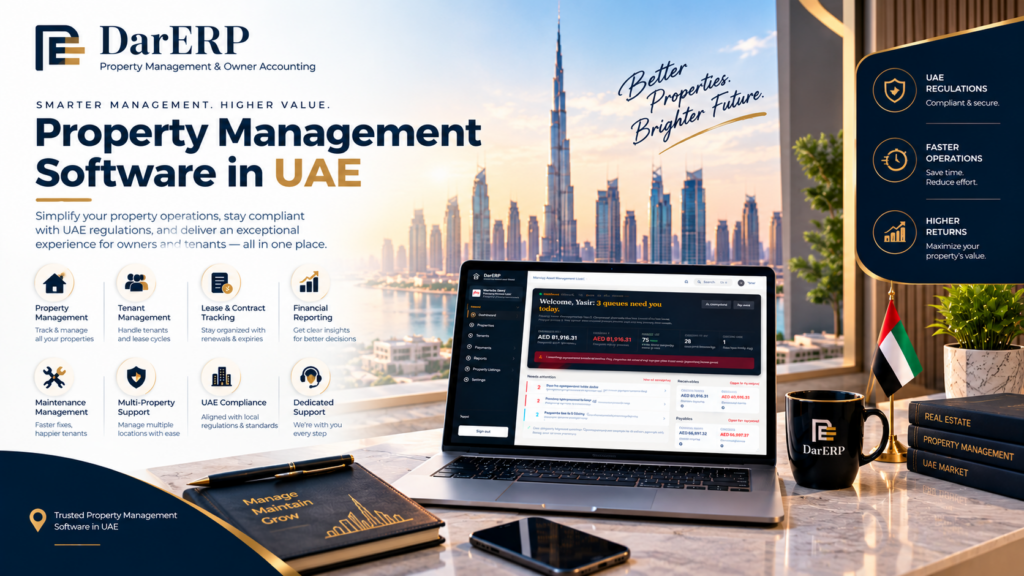
Managing rental properties involves much more than collecting monthly rent and maintaining tenant information. Landlords and real estate companies must organize lease agreements, track payments, handle maintenance requests, manage expenses, and maintain accurate property records. As the number of properties increases, these responsibilities can become difficult to manage through spreadsheets and manual processes.
For beginners, understanding Property Management Software in UAE is an important step toward creating more organized and efficient real estate operations. A centralized digital platform helps connect everyday property activities, improve financial visibility, and reduce repetitive administrative work. Whether you manage a few apartments or a growing portfolio, learning how property management technology works can help you make better operational decisions.
What Is Property Management Software?
Property management software is a digital system that helps landlords, property managers, and real estate businesses organize rental properties and related activities within one platform. It can store property information, tenant details, lease agreements, payment records, maintenance requests, documents, and financial transactions.
Instead of using different spreadsheets for every activity, businesses can manage important information through a connected property administration platform. This makes records easier to access and helps employees work with consistent information.
For beginners, the main purpose of property management software is simple: to make everyday real estate operations easier to organize, monitor, and manage.
How Does Property Management Software Work?
Property management software works by connecting properties, units, tenants, contracts, and financial transactions through a central database. Each rental unit can have its own record containing occupancy details, lease information, payment schedules, and related documents.
For example, when a tenant signs a rental agreement, the property team can record the contract terms, rental amount, installment dates, and security deposit. These details can then be used to monitor upcoming payments and renewal dates.
A connected system reduces the need to repeatedly enter the same information and provides a clearer overview of property activities.
Why Is Property Management Software Important in the UAE?
The UAE real estate market includes residential apartments, villas, office spaces, retail properties, commercial buildings, and mixed-use developments. These properties often involve different rental arrangements, payment schedules, ownership structures, and maintenance requirements.
Property managers must also maintain organized tenancy documentation and follow applicable rental procedures, which can vary between emirates.
A centralized rental property management solution helps businesses coordinate these responsibilities while maintaining better control over records, payments, and daily operations.
For growing property companies, having reliable information in one system can improve communication between leasing, accounting, maintenance, and management departments.
Key Features Beginners Should Understand
Before choosing property software, it is helpful to understand the functions commonly available in modern systems. Although features vary between providers, a suitable platform should cover essential operational and financial requirements.
Important capabilities include:
- Property and tenant operations: Property registration, unit availability, tenant profiles, lease contracts, renewal dates, occupancy monitoring, and maintenance requests.
- Financial and administrative management: Rental collections, payment schedules, post-dated cheques, property expenses, accounting records, document storage, owner statements, and reporting.
These functions help businesses keep related information connected rather than managing each task through a separate application.
Property and Unit Management
Every rental property needs an organized record. This may include the property location, building information, unit number, rental value, occupancy status, and ownership details.
A digital property inventory management system keeps these records structured, making it easier to identify occupied units, available properties, and approaching lease expirations.
For companies managing multiple buildings, centralized records provide a clearer understanding of the entire portfolio.
DarERP supports connected property administration, helping real estate businesses organize property information and related operational activities within one environment.
Tenant Management Made Simple
Tenant management involves maintaining information throughout the rental relationship. This includes contact details, tenancy agreements, payment history, documents, deposits, maintenance requests, and renewal information.
A centralized tenant records management system connects these details with the appropriate property and unit.
For beginners, this means property teams can find important information without searching through separate folders or spreadsheets. It also helps different employees access consistent tenant records when responding to questions or handling administrative tasks.
Lease Agreements and Renewal Tracking
Lease administration is an essential part of property management. Each agreement contains important information such as contract dates, rental values, installment schedules, deposits, and renewal conditions.
A structured lease tracking solution helps teams monitor upcoming expirations and prepare necessary documentation before deadlines.
This can reduce last-minute administrative work and improve planning for units that may become vacant.
Keeping contract records connected with tenant information also makes it easier to review tenancy histories and rental terms.
Understanding Rent Collection and PDC Management
Rent collection is one of the most important financial responsibilities of property managers. Businesses need to know how much rent is expected, which payments have been received, and which balances remain outstanding.
A digital payment tracking system can connect rental schedules directly with tenancy agreements. This allows finance teams to monitor collections by tenant, property, or reporting period.
In the UAE, post-dated cheques are commonly used in rental arrangements. Software with PDC tracking capabilities can help organize cheque amounts, maturity dates, and payment status, reducing dependence on manual registers.
Property Accounting and Expense Tracking
Managing rental income is only one part of property finances. Landlords and property companies must also monitor repairs, service costs, supplier invoices, utility expenses, deposits, and owner-related transactions.
An integrated real estate financial management system can connect these expenses with the relevant properties and accounts.
DarERP Property Management Software provides a connected approach to property operations and accounting, helping businesses maintain organized financial information alongside lease and tenant records.
For beginners, financial integration is valuable because it reduces the need to manage property transactions through unrelated accounting files.
Maintenance and Service Request Management
Maintenance affects both property condition and tenant satisfaction. Issues involving plumbing, electrical systems, air conditioning, and general repairs require proper coordination.
A digital maintenance process helps teams record service requests, assign responsibility, monitor progress, and maintain repair histories.
Property managers can identify incomplete requests and recurring problems more easily, helping them organize maintenance activities across different units.
Owner Management and Financial Reporting
Some property management companies operate buildings and rental units on behalf of multiple landlords. Each property owner may require separate information about rental income, operating expenses, balances, and overall performance.
An owner account management system can help organize these records and support the preparation of financial statements.
This improves transparency and provides property owners with a clearer understanding of their assets.
Dashboards and Property Performance Reports
One advantage of digital property management is easier access to business information. Instead of preparing every report manually, management teams can review organized operational and financial records.
Useful indicators include occupancy rates, collected rent, overdue payments, lease expirations, maintenance activity, and property expenses.
DarERP Property Management Software UAE supports connected property reporting, helping businesses review operational and financial information within a centralized environment.
For beginners, dashboards can make complex property information easier to understand.
Cloud-Based vs Traditional Property Management Software
Cloud-based systems allow authorized employees to access property information through an internet connection, depending on the provider’s access and security arrangements.
Traditional on-premise software is hosted within an organization’s own infrastructure and may require additional internal technical management.
Both options have advantages. Businesses should compare accessibility, security, implementation requirements, backup procedures, technical support, and long-term costs before making a decision.
Benefits of Property Management Software for Beginners
The biggest benefit of property software is improved organization. Businesses can maintain property records, rental transactions, tenancy details, maintenance information, and financial reports within one structured environment.
This can reduce duplicate data entry, improve record accuracy, simplify reporting, and make communication easier between departments.
For new landlords and growing real estate companies, centralized information can also make it easier to understand performance and manage additional properties over time.
How to Choose Your First Property Management System
Beginners should start by identifying their most important requirements. Consider the number of properties managed, rental payment methods, lease processes, accounting needs, maintenance responsibilities, and reporting expectations.
It is also important to evaluate usability. A platform should make common tasks straightforward rather than introducing unnecessary complexity.
Request a practical demonstration, compare available modules, review security controls, and consider whether the system can support future portfolio growth.
Common Mistakes to Avoid When Choosing Software
One common mistake is selecting software based only on price or the number of advertised features. A platform may offer many tools but still be difficult to use or unsuitable for existing workflows.
Another mistake is overlooking data migration, employee training, and accounting requirements. Businesses should understand how current records will be transferred and how employees will learn to use the system.
Choosing software that fits real operational needs is generally more valuable than selecting the most complicated platform available.
Final Thoughts
Understanding property management technology does not require advanced technical knowledge. For beginners, the most important concept is that a centralized platform helps organize information and connect the different responsibilities involved in managing rental properties.
Property Management Software in the UAE can simplify lease administration, tenant management, rental payment monitoring, maintenance coordination, accounting, and business reporting.
The right solution should make everyday work easier, provide clearer financial visibility, and support the business as its portfolio grows. By choosing a system based on practical requirements, landlords and real estate companies can create a more organized foundation for long-term property operations.
Frequently Asked Questions
1. What is Property Management Software in the UAE?
Property Management Software in the UAE is a digital platform that helps landlords and real estate companies manage properties, tenants, leases, rental payments, maintenance, financial records, documents, and reporting through one centralized system.
2. Is property management software suitable for small landlords?
Yes. Small landlords can benefit from organized tenant information, lease tracking, payment records, and maintenance management. The most suitable platform depends on the number of units, budget, and required features.
3. What features should beginners look for in property management software?
Beginners should prioritize property records, tenant management, lease tracking, rental collections, payment schedules, accounting, maintenance requests, document organization, and simple reporting. Ease of use and scalability are also important considerations.