
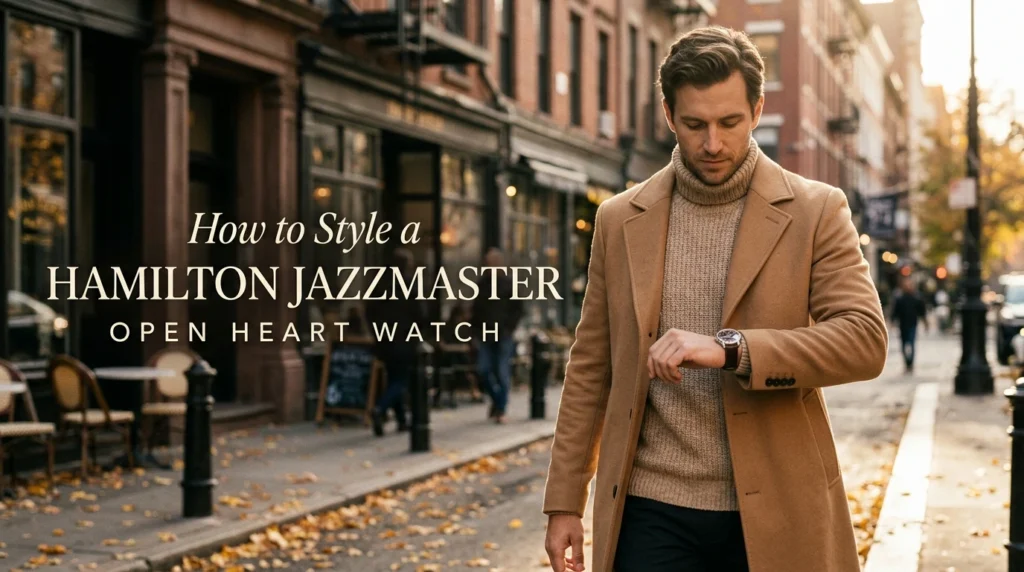
Most watches likely sit on the wrist and just do their job quietly. The Hamilton Jazzmaster Open Heart doesn’t really do quiet, not even close. With that cut-out dial, it shows you a slice of the movement—the balance wheel spinning and the gear train working, and yes, people notice right away. You get those questions, “What is that?” and “Why does it look like that?” After a while it changes how you think about wearing it, because a watch that grabs attention also puts a small bit more pressure on everything else you decide to wear.
It’s a lovely problem to run into, as long as you know what you’re doing.
Know What You’re Working With
It is powered by Hamilton’s H-10 automatic caliber, which boasts an impressive 80-hour power reserve, and it is used in the Hamilton Jazzmaster Open Heart. It is contained within a case made of stainless steel and is offered in sizes that range from 40 mm to 42 mm for men and 36 mm for women. Depending on the reference, it ships either with a steel bracelet or a leather strap, while the dials range from silver and champagne through smoky brown, and then there are a few louder shades added in 2024, like they just couldn’t help themselves.
This creates a one-of-a-kind push-pull dynamic that demonstrates more intriguing styling choices. It is mechanically transparent, but it is still sized and balanced like a dress watch.
Suiting Up with the Hamilton Jazzmaster Open Heart
Tailored clothing is kind of where this watch was made to go, honestly. With a navy or charcoal suit, the steel bracelet version is the right call—the brushed case catches the light nicely, and the bracelet feels like it’s part of your cufflinks and belt hardware, not some afterthought that showed up late, or whatever. Keep your metals consistent. If you’ve got silver cufflinks, don’t grab a brown leather strap model and assume it will all stay harmonized, like it’ll just do it by itself.
For business casual, like a dress shirt with slim trousers and no tie, leave the left cuff unbuttoned, then roll it back once. This small, deliberate move gives the impression that you are wearing the watch intentionally, rather than simply because it came with the suit and you didn’t think about it. It’s more subtle than people think, but it matters.
Black-tie is a different math, though. Switch to a leather strap. The darker dial versions on leather feel closer to that classic dress-watch world, and that open heart aperture becomes a quiet detail, not the biggest headline in the room. It is more appropriate for the watch to complement the overall look rather than compete with it when attending formal events. Due to the fact that the ensemble already contains a sufficient number of components to manage, the watch does not require any additional attention. It should not overshadow the ensemble but instead enhance it in a subtle manner.
Smart Casual and the Leather Strap
The steel bracelet sometimes gets all the attention, but the leather strap version is arguably the more versatile piece. Chinos, a well-fitted button-down, and clean leather shoes—that’s a combination where the watch fits without effort. It’s not trying to be sporty, it’s not trying to be too formal, and it just sits there and looks considered.
Autumn and winter dressing plays well with the brown dial and brown strap combination, kind of like it all just fits without much effort. Camel overcoats, olive trousers, and burgundy knitwear—warm tones work with the sunray brushed brown dial in a way that silvers and blacks simply don’t, not even close. It gives the whole outfit a coherent palette without having to think too hard about it, honestly.
A linen blazer over dark jeans and a plain white tee works with the steel bracelet version in warmer months. The watch gives the casual combo enough structure to stop it from looking like you just grabbed whatever was clean before you really decided.
Getting the Accessories Right
The silver-toned hardware, such as belt buckles and shoe eyelets, as well as any rings that you might wear, look great with the steel case. There is a sense of cohesion throughout the entire wrist area when you maintain these accessories within the same general color family. Mixing gold and silver can work in places, but it takes more confidence than most relaxed, casual styling moments really give you.
For leather strap versions, it’s important to coordinate the strap with both your belt and your shoes. Pair a brown strap with a brown belt and brown shoes, and match a black strap with a black belt and black shoes. It’s one of those rules that feels a bit tedious until you ignore it once, and then you notice the difference. Don’t go piling chunky bracelets on the same wrist. The open dial is kind of the point here, so if you cover the wrist with extra hardware, it sort of defeats the whole purpose.
Occasions Worth Dressing For
Weddings, dinners out, evening events—these are moments where the open heart aperture gets to actually do something. A slate-blue blazer, white dress shirt, and dark trousers put the steel case in good company without overpowering anything. The watch catches light, someone at the table notices the movement through the dial, and there’s your conversation.
For women, the 36mm Lady Auto variant introduced with Hamilton’s 2024 color releases fits more naturally across a wider range of outfits—tailored workwear, evening dresses, and elevated casual. The smaller case doesn’t fight with finer proportions, and the color-forward dials open up styling combinations that the classic silver and champagne references don’t.
The Short Version
Wear the steel bracelet with suits and tailored clothing. Switch to leather for formal evenings and everything that wants to feel a little warmer. Match your metals, match your leathers, and don’t crowd the wrist. The Hamilton Jazzmaster Open Heart has enough visual interest built into the dial that your outfit doesn’t need to compete with it—it just needs to give it something worth being seen against.